VW Golf MK7 GTI: The Generation That Set the Nürburgring FWD Record
The Golf MK7 is the generation most people point to when asked which GTI was best. Launched in spring 2013 on Volkswagen's new MQB platform, it was 42 kg lighter than the MK6, sharper to drive, more refined, and available from launch in two power outputs. The Clubsport S set the front-wheel drive Nürburgring record in 2016. The TCR closed the generation in 2019 with 290 horsepower and an optional top speed of 260 km/h. In six years of production, the MK7 GTI became the definitive expression of everything the formula had been building toward since 1976.
This is part of our complete VW Golf guide covering every generation from MK1 to MK8. For the story of the generation it replaced, read our VW Golf MK6 GTI guide.
MQB: the platform that changed everything
The MK7's most significant achievement is one most buyers never see. The Modular Transverse Matrix (MQB) platform on which it is built shares components across Volkswagen Group's entire range of transversely-engined cars: the Golf, the Audi A3, the SEAT Leon, the Škoda Octavia. By standardising the architecture from the firewall to the front axle, Volkswagen cut development costs dramatically and achieved weight reductions that would not have been possible under the previous PQ35 platform.
The MK7 GTI weighed 42 kg less than the MK6 it replaced. On a car of this size and performance level, 42 kg is not a marginal improvement: it is the difference between a car that feels light and agile and one that feels merely competent. The weight reduction came from thinner high-strength steel sections, aluminium components where steel had previously been used, and a thorough review of every system in the car for unnecessary mass.
The longer wheelbase the MQB platform allowed (59 mm more than the MK6) gave the MK7 more interior space without a larger exterior footprint. Rear legroom improved meaningfully. The boot grew by 30 litres. The MK7 was simultaneously lighter, roomier and more dynamic than the car it replaced, which is an unusual combination in any engineering programme.
Two versions from day one
For the first time in GTI history, Volkswagen launched the MK7 with two distinct power outputs simultaneously. The standard GTI produced 220 horsepower. The Performance version produced 230 horsepower and added a mechanical limited-slip differential (VAQ) on the front axle. The Performance pack also brought larger Brembo brakes and slightly revised chassis tuning.
The VAQ differential transformed the Performance variant's behaviour on circuit and on fast roads. Where the standard car's XDS electronic differential was sophisticated and effective, the mechanical unit in the Performance was more immediate and more transparent in its operation. Drivers who spent time on track consistently preferred the Performance over the standard car, even though the power difference was modest. The differential was the real upgrade, not the extra 10 horsepower.
After the 2017 facelift, the standard GTI was upgraded to 230 horsepower and the Performance to 245 horsepower. From 2018, only the Performance specification remained in production. The MK7 GTI's final form was therefore 245 horsepower with the mechanical differential as standard: the best version of the generation, and the specification most likely to appreciate in value.
The Clubsport: 40 years of GTI
In 2016, Volkswagen marked the GTI's 40th anniversary with the Golf GTI Clubsport. Built on the MK7 platform, the Clubsport used a revised version of the 2.0-litre EA888 engine producing 265 horsepower in standard mode and 286 horsepower for 10 seconds at a time via an overboost function that raised turbo pressure by 0.2 bar. The 0-100 km/h time was 5.9 seconds. It was the fastest Golf GTI ever built at the time of its launch.
The Clubsport came on standard Michelin Pilot Sport Cup 2 tyres as a factory option, a tyre specification previously associated with track-prepared supercars rather than hot hatches. Combined with the overboost function, the limited-slip differential, and the lower, stiffer chassis, it produced a car that blurred the boundary between a road car and a track tool in a way the standard GTI deliberately did not.
The Clubsport S: the fastest front-wheel drive car in the world
The Clubsport S was a different proposition entirely. Only 400 were produced globally for the 2016 model year. The rear seats were removed. The sound deadening was reduced. The engine was upgraded to the IS38 turbocharger producing 310 horsepower. An aluminium subframe replaced the steel unit. The kerb weight dropped to 1,360 kg.
On 3 April 2016, the Clubsport S lapped the Nürburgring Nordschleife in 7 minutes 49.21 seconds. It was the fastest lap ever set by a front-wheel drive production car. The previous record holder was the Honda Civic Type R. The Clubsport S beat it by 1.4 seconds.
The record has since been beaten by subsequent generations of hot hatches. But in 2016, a Golf GTI was the fastest front-wheel drive production car that had ever turned a wheel at the Nürburgring. For a model that had started life as an unauthorised side project to build 5,000 units, it was an extraordinary place to arrive.
The TCR: the final chapter
The MK7 generation ended in 2019 with the Golf GTI TCR, named after the Touring Car Racing category in which Volkswagen had competed successfully with a Golf-based car. The TCR produced 290 horsepower from the IS38 turbocharger, used the mechanical limited-slip differential from the Performance as standard, and was available with an optional top speed increase to 260 km/h. It was the most powerful standard-production Golf GTI Volkswagen had ever offered at the time of its launch.
The TCR also marked the final year of the MK7 generation. The Golf MK8 was already in development on the MQB Evo platform. The TCR was a fitting conclusion to a generation that had started at 220 horsepower in 2013 and ended at 290 in 2019, passing through the Clubsport, the Clubsport S Nordschleife record, and the facelift along the way.
Why the MK7 is considered the best GTI
The MK7's reputation rests on a specific combination of qualities that no other Golf GTI generation has fully replicated. It is lighter than the MK8 that followed it. It is more powerful and better equipped than the MK6 it replaced. The chassis communicates the road surface with a transparency that the MK8's additional electronic systems partially obscure. The interior is premium without being cluttered. The driving experience rewards both casual daily use and committed circuit driving without feeling like a compromise in either direction.
The MK7 is also the last Golf GTI with a conventionally analogue relationship between driver and car. Physical controls throughout the cabin. A straightforward interface. A car whose responses feel directly connected to driver inputs. The MK8 moved significantly toward digital integration. The MK7 is the last generation where that integration had not yet happened.
On your wall
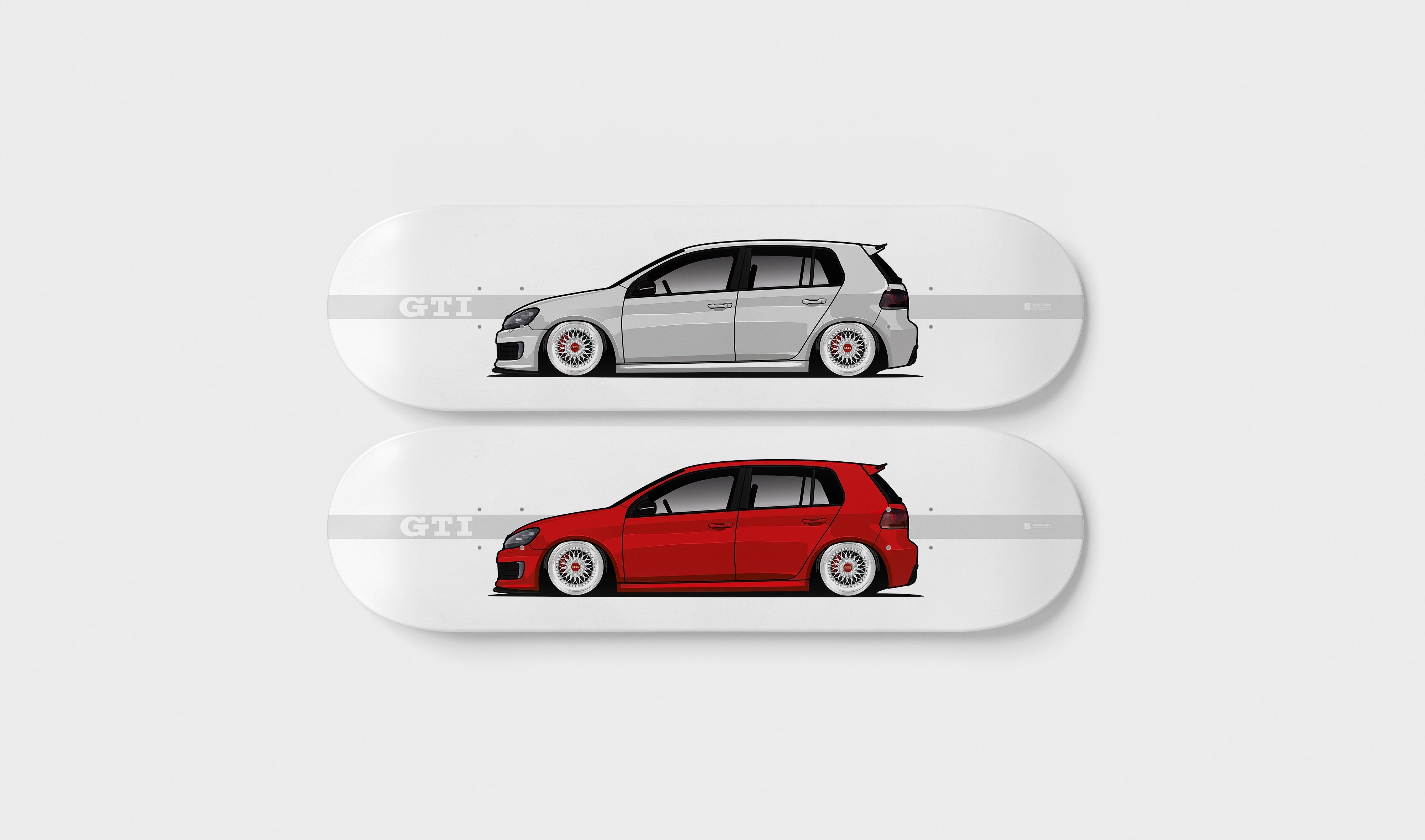
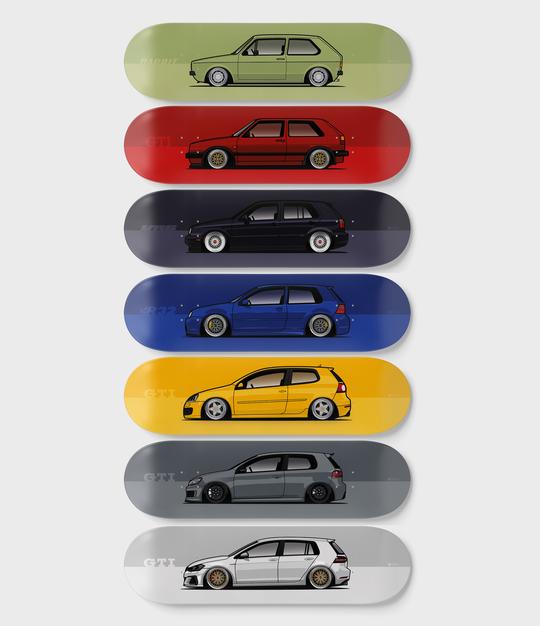
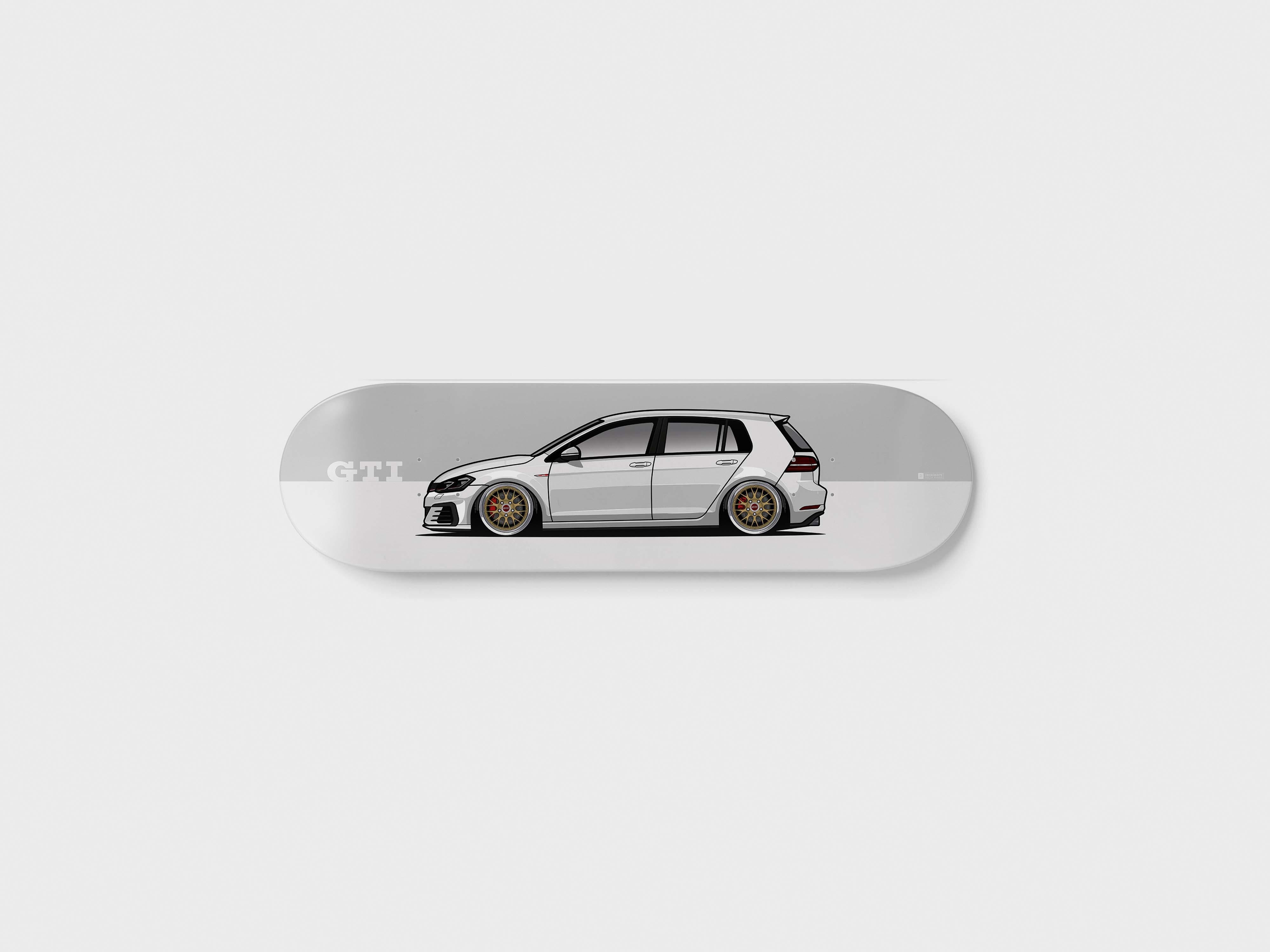
The Deckorate Golf MK7 GTI deck captures the generation in the specification that made its reputation: the clean lines of the MK7 body, the signature red stripe, and the BBS-style alloys that completed the classic GTI visual formula on the most accomplished chassis the nameplate had ever produced.

Shop the VW Golf MK7 GTI deck →