VW Golf MK6 GTI: The Underrated Generation That Sharpened the Formula
The Golf MK6 is the generation nobody asked for and most people underestimate. Unveiled at the Paris Motor Show in October 2008 and largely based on the MK5 platform it replaced, it was immediately characterised as a facelift rather than a new car. That characterisation is mostly accurate. And yet the MK6 GTI is sharper, more involving and better to drive than the MK5 it nominally replaced. Hans-Joachim Stuck helped develop the chassis. The XDS electronic differential transformed front-wheel drive handling. The Edition 35 is already a collector's piece. The MK6 deserves better than its reputation.
This is part of our complete VW Golf guide covering every generation from MK1 to MK8. For the story of the generation it replaced, read our VW Golf MK5 GTI guide.
Paris 2008: a familiar face, a different car
Volkswagen unveiled the MK6 at the Paris Motor Show in October 2008 against the backdrop of the global financial crisis. The timing was not ideal for launching an expensive new car development programme, and the MK6 reflected that commercial reality: it shared the MK5's PQ35 platform, its basic body structure, and its general proportions. The investment went into the details rather than the foundations.
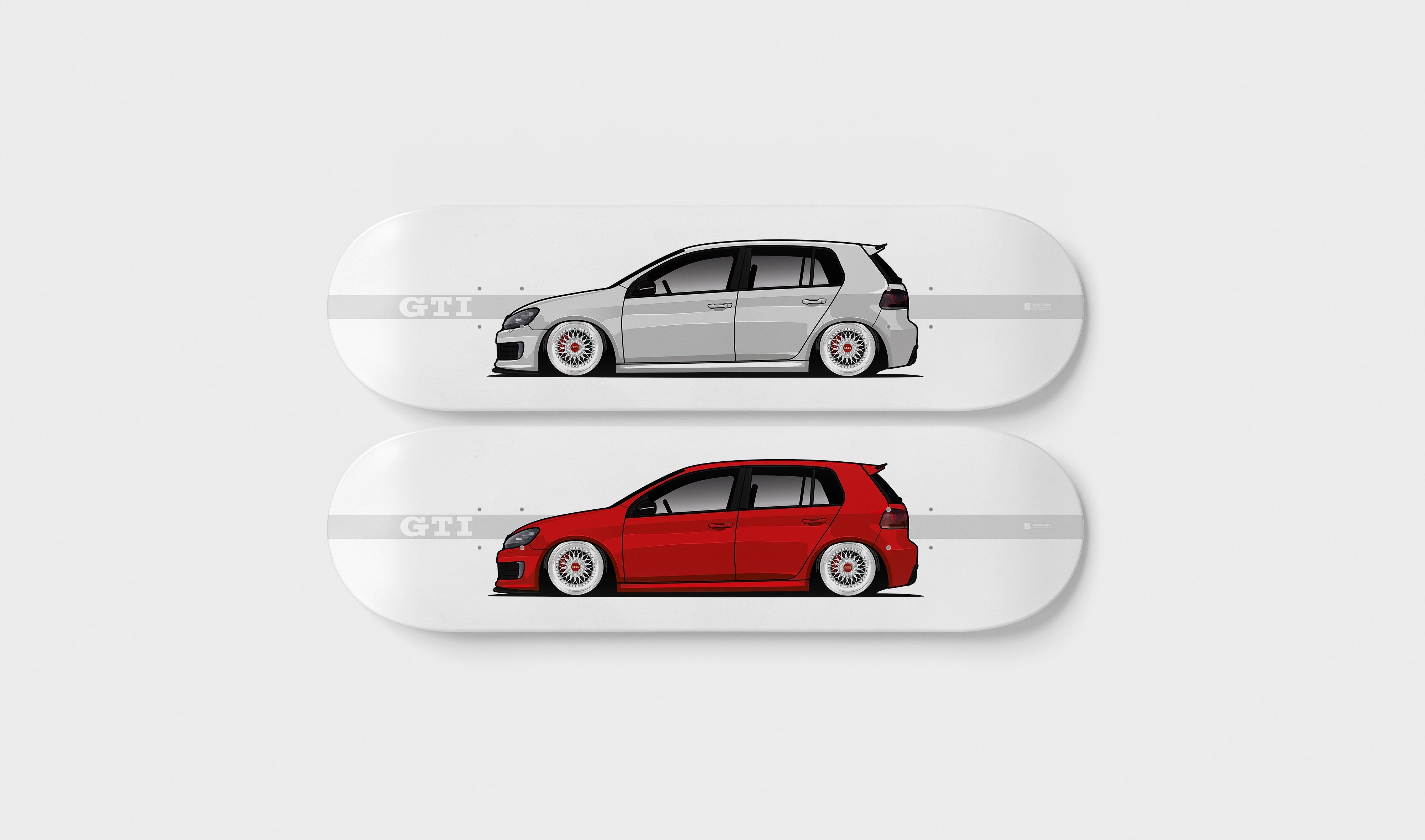
The exterior was restyled with sharper lines, LED daytime running lights, and a more angular front end. The interior received meaningfully improved materials and a more cohesive design. The GTI version gained two red stripes across the honeycomb grille rather than the MK5's single stripe, dual exhaust outlets with chrome tips, and a revised front bumper. It looked distinctly more aggressive than its predecessor despite sharing the same basic shape.
The MK6's production run was the shortest of any Golf generation: just four years from 2009 to 2013. It was superseded by the MK7 when Volkswagen had the resources and the new MQB platform to invest in a genuinely new Golf. The MK6's brevity is part of why it tends to be overlooked. It existed between two celebrated generations and never had time to establish its own distinct identity in the way the MK2, MK5 and MK7 did.
Hans-Joachim Stuck and the XDS
The MK6 GTI's most significant technical story is the XDS electronic cross-axle differential lock. Previous Golf GTIs used an open differential, which meant that under hard cornering the inside front wheel could spin uselessly while the outside wheel struggled for traction. The XDS detected this condition and applied individual brake pressure to the spinning wheel, effectively creating a limited-slip effect without the mechanical complexity of a conventional differential.
The system was developed with input from Hans-Joachim Stuck, the German racing driver who had won the Nürburgring 24 Hours and competed at the highest levels of touring car and sportscar racing across four decades. His involvement focused on ensuring the XDS system enhanced rather than interfered with the GTI's natural handling balance. The result was a front-wheel drive hot hatch that could carry speed through corners more effectively than anything the segment had previously offered.
The XDS transformed the GTI's behaviour on circuit and on fast roads. Where the MK5 could be provoked into understeer under hard cornering, the MK6 resisted it more effectively and allowed the driver to use the throttle more aggressively on corner exit. Road tests consistently noted the improvement. Hans-Joachim Stuck's name on the development programme was not marketing: it produced a measurable result.
The sound of the MK6
Volkswagen added an exhaust sound generator to the MK6 GTI: a system that piped amplified exhaust noise into the cabin through the speaker system. The intention was to give the car a more characterful sound without the cost and complexity of a larger or more exotic exhaust system. The reaction from the automotive press was mixed. Some appreciated the enhanced character. Others found the artificial nature of it difficult to accept in a car that prided itself on directness and honesty.
The physical exhaust system was redesigned with one outlet on each side rather than the centralised twin exits of the MK5. Combined with the dual red-striped grille, this gave the MK6 GTI a symmetrical, more purposeful rear appearance that read as more aggressive than its predecessor.
The Edition 35 and the adidas GTI
The MK6's short production run still produced two special editions worth knowing about.
The Golf GTI Edition 35 arrived in 2011 to mark the GTI nameplate's 35th anniversary. The 2.0-litre TSI engine was upgraded with a new turbocharger and revised tuning, raising output to 235 horsepower and 300 Nm of torque. The 0-100 km/h time dropped to 6.6 seconds. Exterior identification came from winglets on the front bumper, black detailing on the grille, and 18-inch Watkins Glen alloy wheels. Inside, Jacky-design sport seats with 35 logos embroidered on the headrests and the golf ball gear lever as a deliberate reference to the MK1. The Edition 35 was presented at the Wörthersee GTI meeting in Austria in June 2011 before going on sale. It is already considered a future collector's piece.
The adidas GTI was a collaboration with the sportswear brand producing just 4,410 examples worldwide. Oryx White paint, 18-inch Serron alloy wheels, bi-xenon headlights, LED taillights, and adidas branding throughout the interior. The limited production number and the unusual collaboration have made it among the most sought-after MK6 variants.
The Golf R: the MK6's performance flagship
While the GTI defined the MK6's character for most buyers, the Golf R represented the generation's performance peak. Unveiled at Frankfurt in 2009 as the successor to the MK5 R32, the Golf R replaced the naturally aspirated VR6 with a 2.0-litre turbocharged four-cylinder producing 270 horsepower, mated to Haldex all-wheel drive. The 0-100 km/h time was 5.5 seconds with DSG.
The R badge replacing the R32 name signalled a fundamental change in the Golf performance hierarchy. The VR6 era was over. Turbocharged four-cylinders would define Golf performance from this point forward, offering more power, better efficiency, and comparable or superior performance to the engines they replaced. The MK6 Golf R is the first chapter of that story.
The overlooked generation's legacy
The MK6's reputation as a mere MK5 facelift understates what Volkswagen achieved in four years of production. The XDS differential genuinely improved front-wheel drive dynamics. The build quality improved over the MK5. The Edition 35 produced a special edition worthy of the GTI's anniversary heritage. The adidas collaboration created one of the most distinctive Golf variants ever offered.
The MK6 also coincided with the Golf R's transition from VR6 to turbocharged four-cylinder, a change that defined the Golf performance range for the decade that followed. In that context the MK6 is not a footnote: it is the bridge between the MK5's celebrated character and the MK7's celebrated execution. Every Golf that followed owes something to what the MK6 established.
On your wall
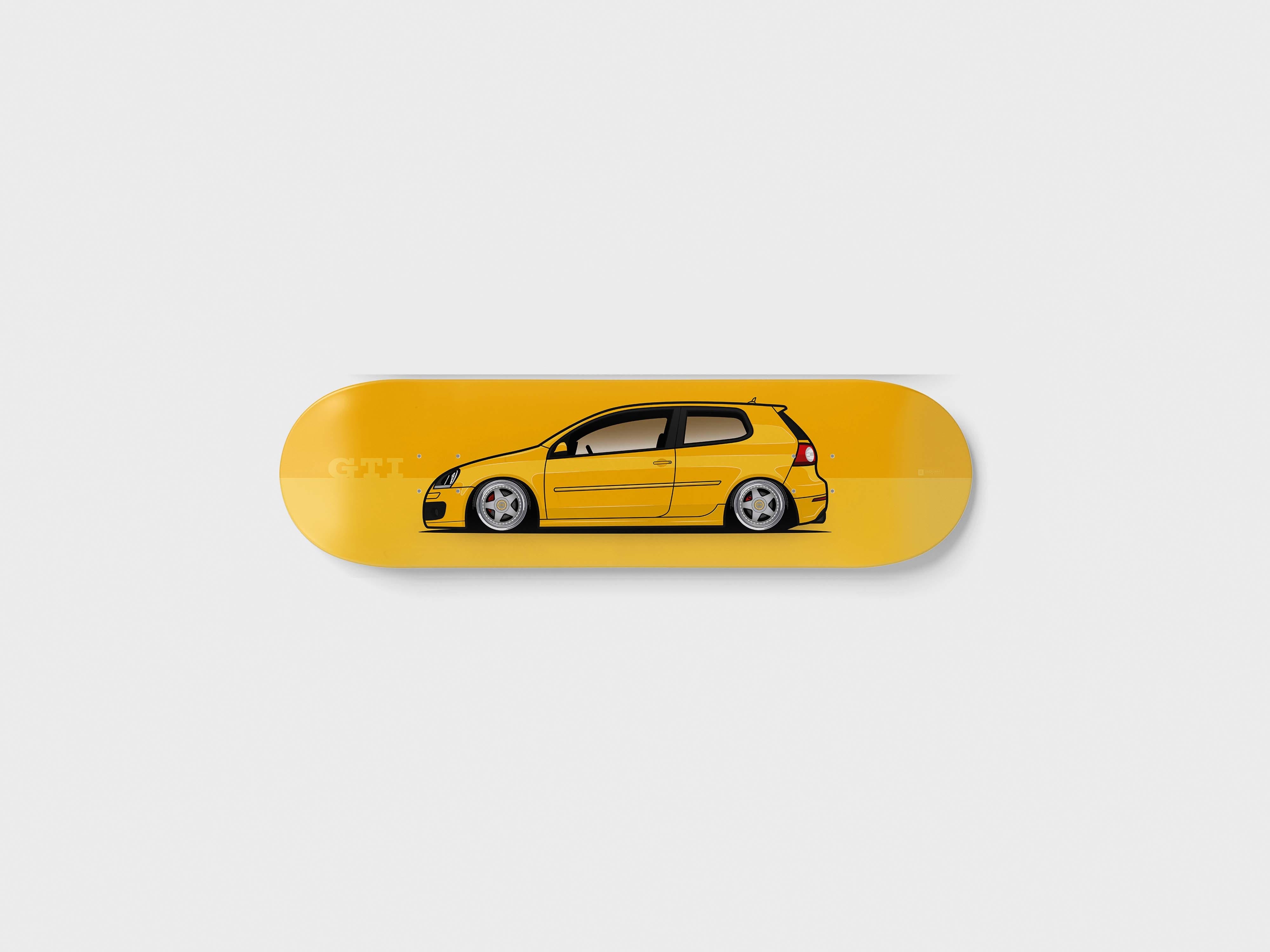
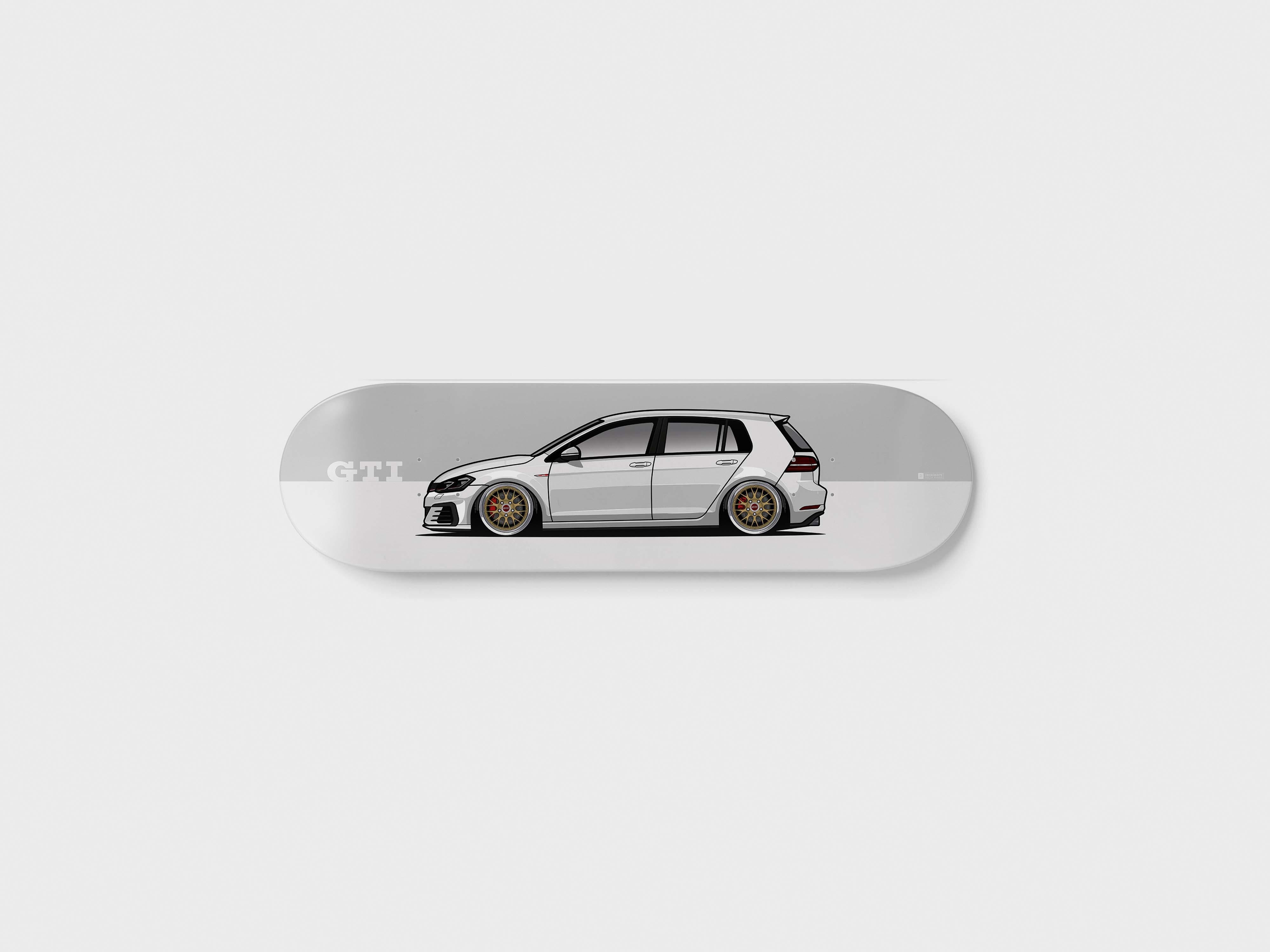
The Deckorate Golf MK6 GTI deck captures the generation in its most recognisable specification: the dual red-stripe grille, the angular headlights, and the dual exhaust outlets that gave the MK6 its more aggressive visual identity relative to the MK5 it replaced.

Shop the VW Golf MK6 GTI deck →