After the Hungarian Grand Prix in 2025, Max Verstappen was 104 points behind championship leader Oscar Piastri. Nine races remained. His car was consistently slower than the two McLarens. Almost every analyst and commentator had written him off. He then won six of the next nine races and lost the championship by two points on the final lap of the final race of the season. This is what Verstappen does.
Born into racing
Max Verstappen was born in Hasselt, Belgium in September 1997. His father Jos Verstappen was an F1 driver who competed in 106 Grands Prix. His mother Sophie Kumpen was a successful kart racer at international level. He started karting at four years old.
By the time he was fifteen he held three international karting titles simultaneously: two European championships and a world championship. No driver in history had achieved that before. Red Bull signed him to their junior programme in 2014. He tested an F1 car at the Japanese Grand Prix that year, aged seventeen years and three days, becoming the youngest driver ever to participate in a Grand Prix weekend.
The following year he made his race debut with Toro Rosso. Youngest driver to start an F1 race. Youngest driver to score points. The records were arriving before he had finished his first season.
The youngest winner in history
Four races into the 2016 season, Red Bull promoted Verstappen from Toro Rosso to the main team. His first race for Red Bull was the Spanish Grand Prix. He won it. Eighteen years and 228 days old. The youngest race winner in the history of Formula 1, a record he still holds.
What followed was five years of promise on cars that were mostly good but rarely good enough to win championships. Verstappen took podiums, took spectacular wins, and developed a reputation for a driving style that was simultaneously the most exciting and the most controversial on the grid. His defending was aggressive to the point where the FIA issued new guidelines specifically in response to his racecraft. He didn't particularly change. He kept winning.
2021: the championship that defined him
The 2021 season produced the most intense title fight in Formula 1 in decades. Verstappen against Lewis Hamilton, Red Bull against Mercedes, across 22 races and a series of on-track collisions that generated more controversy than any season in the modern era. They went into the final race in Abu Dhabi level on points.
What happened in the closing laps of that race remains the most disputed finish in recent F1 history. A safety car, a decision on lapped cars, and Verstappen passing Hamilton on the final lap to win both the race and the championship. Hamilton and Mercedes protested. The result stood. Verstappen was World Champion for the first time.
The following year removed any doubt. He won fifteen races in 2022, breaking the record for most wins in a season. He won the championship with four races to spare.
2023: the most dominant season in F1 history
Then came 2023. Nineteen wins from twenty-two races. A record that may never be broken. Ten consecutive victories. The most wins in a season, the most podiums in a season, and a championship that was decided long before the calendar reached its conclusion. The Red Bull RB19 was the most dominant car in the history of the sport, and Verstappen drove it to results that put his name alongside the greatest seasons any driver has ever produced.
The question being asked at the time: was it the car, or the driver? 2024 answered it.
2024: winning a championship in a car that wasn't the best
Red Bull fell behind McLaren and Ferrari in 2024. The RB20 was competitive early in the season but lost ground as the year progressed. Verstappen won nine races, including a performance in wet conditions at the Brazilian Grand Prix that was widely described as one of the greatest drives in F1 history: seventeenth on the grid, first at the flag, in rain that made the track almost undriveable.
He won his fourth consecutive championship in Las Vegas in November. He became the first driver in 41 years to win the championship in a car that finished third in the Constructors' standings. The debate about whether he was the best driver in the world essentially ended with this season. The car was third-best. The championship was his.
2025: 104 points down, and still nearly won it
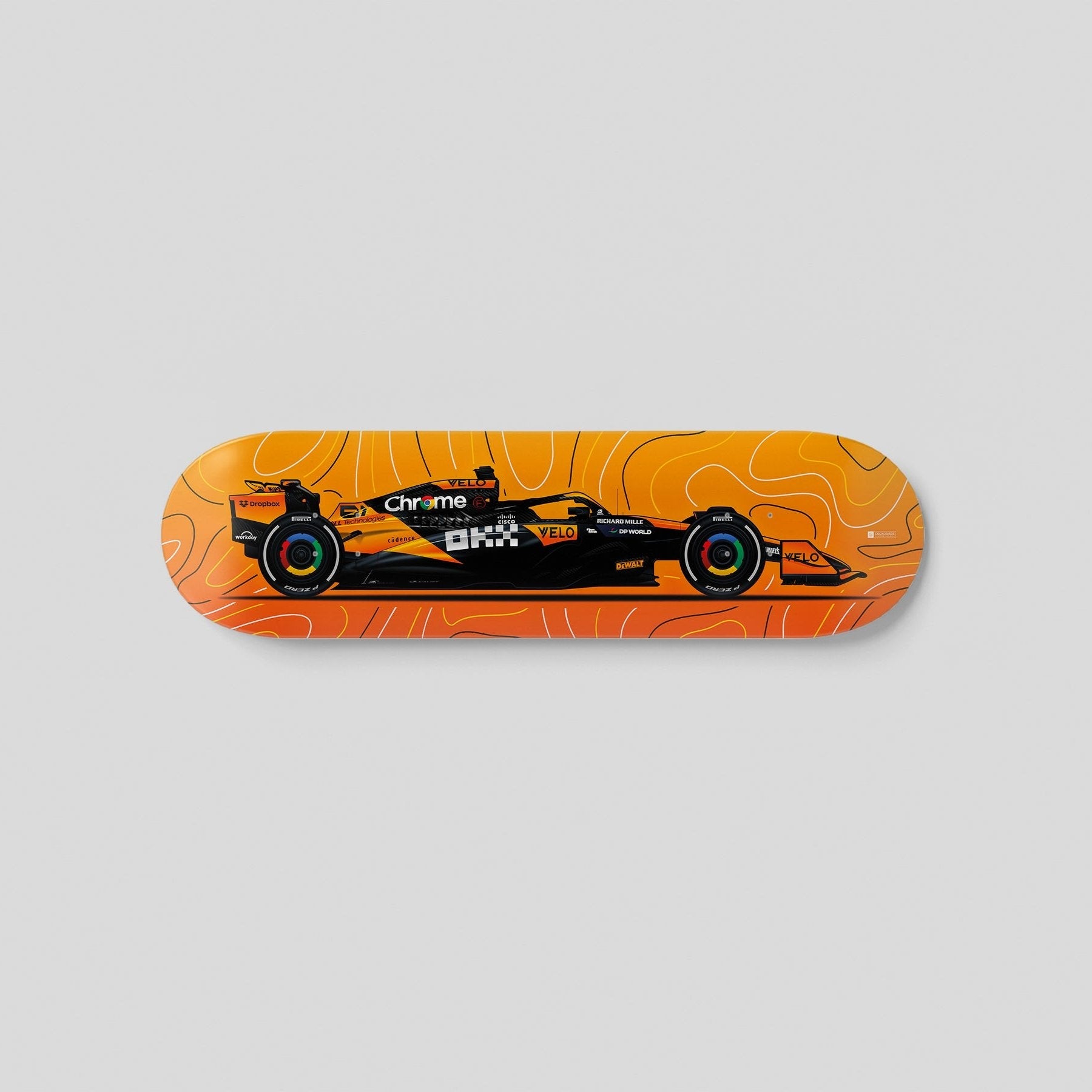
The 2025 season started badly. McLaren had the faster car by a significant margin. Piastri and Norris dominated the first half of the season. After Hungary, Verstappen was 104 points behind Piastri and 70 behind Norris. His team principal publicly acknowledged that the title looked out of reach. Most observers agreed.
Then Verstappen won in Italy. And Baku. And then six of the final nine races overall. McLaren made errors. Piastri's form dipped. The championship that had looked settled became a three-way fight going into the final weekend.
He won the Abu Dhabi Grand Prix. He finished the year with eight wins, the most of any driver in the 2025 season. Norris won the championship by two points. Verstappen ended the year as the driver with the most wins and most pole positions, having lost the title to a teammate pairing in a faster car.
McLaren's team boss Zak Brown compared Verstappen's comeback to a horror movie character that just keeps coming back. He meant it as a compliment.
What makes Verstappen different
Verstappen's driving style is the most analysed in modern Formula 1. The technical descriptions involve his ability to create microseconds of stability in direction changes that allow him to carry more speed than other drivers through corners. In plain terms: he finds grip where other drivers cannot, and he is willing to commit to lines that others regard as physically impossible.
His defenders argue he is the best driver in the history of the sport. His critics point to the controversial moments: the collisions, the defending that has cost other drivers races, the incidents that have generated protests and rule changes. Both things are true simultaneously. He is genuinely divisive in a sport where most drivers generate polite appreciation rather than actual feeling.
Away from the track he competes in sim racing under his own team, plays video games, and in 2026 raced at the Nürburgring 24 Hours in a GT3 car. He became a father in 2025, with partner Kelly Piquet, daughter of three-time F1 champion Nelson Piquet. He is contracted to Red Bull until at least the end of 2028 and is 28 years old.
The conversation about where he ranks in the all-time list is one Formula 1 will be having for decades.
Verstappen on your wall
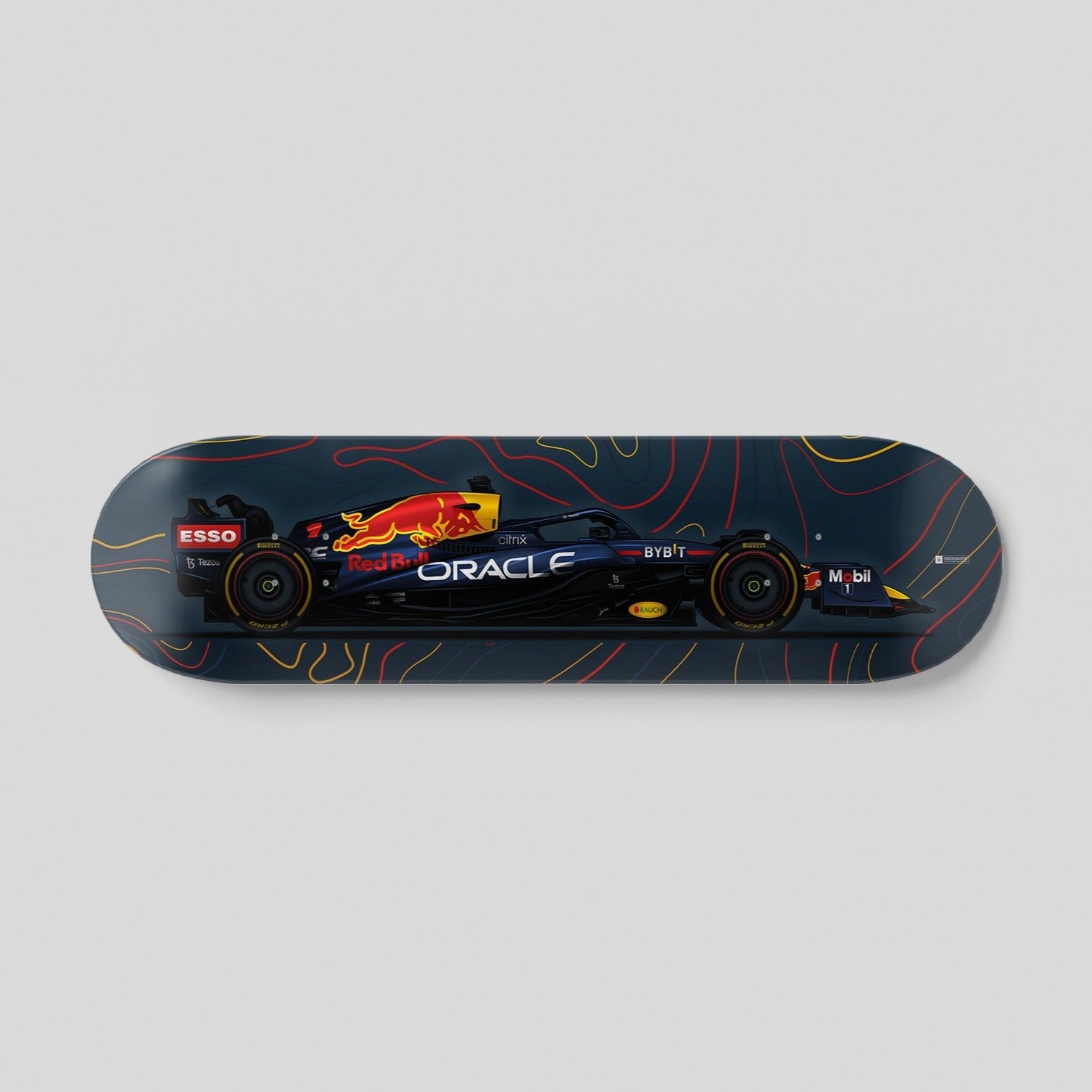
The Deckorate Max Verstappen deck captures the RB18 in the Red Bull livery that carried him to his third and fourth championships. For anyone who has followed the Verstappen era at Red Bull and wants to mark the most dominant period in the sport's recent history, this is the deck.

Shop the Max Verstappen RB18 deck →