VW Golf MK3: The VR6, the Harlekin and the Misunderstood Generation
The Golf MK3 has always been the misunderstood generation. Heavier than the MK2, criticised for softer handling, remembered by some for rust problems that the earlier cars never had. All of that is true. But the MK3 also introduced the VR6 engine, one of the finest pieces of automotive engineering of the 1990s, and produced two of the most collectible Golfs ever built: the GTI Anniversary Edition and the Harlekin. The generation that was supposed to be a step back turned out to be one of the most interesting Golfs Volkswagen ever made.
This is part of our complete VW Golf guide covering every generation from MK1 to MK8. For the story of the generation it replaced, read our VW Golf MK2 GTI guide.
Frankfurt 1991: safety first
Volkswagen unveiled the MK3 at the Frankfurt Motor Show in September 1991. The brief was different from any previous Golf generation: the MK3 was designed to be the safest and most environmentally responsible car in its class. It was the first Golf offered with front airbags as standard. It was the first Golf with a catalytic converter fitted throughout the European range. The 1.9 TDI direct injection diesel engine, introduced in 1993, was the car that kicked off the diesel craze that swept through Europe in the late 1990s and early 2000s.
The body was rounder and more aerodynamic than the MK2, with flush headlights and integrated bumpers that gave it a more modern appearance. Torsional rigidity improved significantly. The interior was more refined and better equipped than any previous Golf. Volkswagen had built a more grown-up car, and the market responded: the MK3 sold in enormous numbers throughout its production run.
The criticism came from the driving enthusiast community. The GTI, now using a 2.0-litre eight-valve engine producing 115 horsepower, felt heavier and less sharp than the MK2 16V it nominally replaced. The weight gain was real: the MK3 was heavier than the MK2 by a meaningful margin. On a fast road the car felt capable but not inspiring. For a generation that had grown up with the MK2 GTI as the reference point, the MK3 was a disappointment.
The 16V and the GTI's recovery
Volkswagen recognised the problem and responded in 1993 with a 16-valve version of the 2.0-litre engine. The MK3 GTI 16V produced 150 horsepower and significantly improved the car's character at higher revs. Lower, stiffer and more willing than the eight-valve, it was closer to what MK2 fans had expected from a GTI successor.
The 16V also revived the bee-sting aerial and distinctive badging that had made the MK2 16V identifiable at a glance. On a circuit or a fast road it proved to be a genuinely capable car, if not the lightweight precision instrument the MK2 had offered. The 16V is now the most sought-after GTI variant from the MK3 range among driving enthusiasts.
The VR6: the engine that saved the generation
The argument about whether the MK3 GTI was a worthy successor to the MK2 misses the point. The MK3's real performance achievement was never the GTI: it was the VR6.
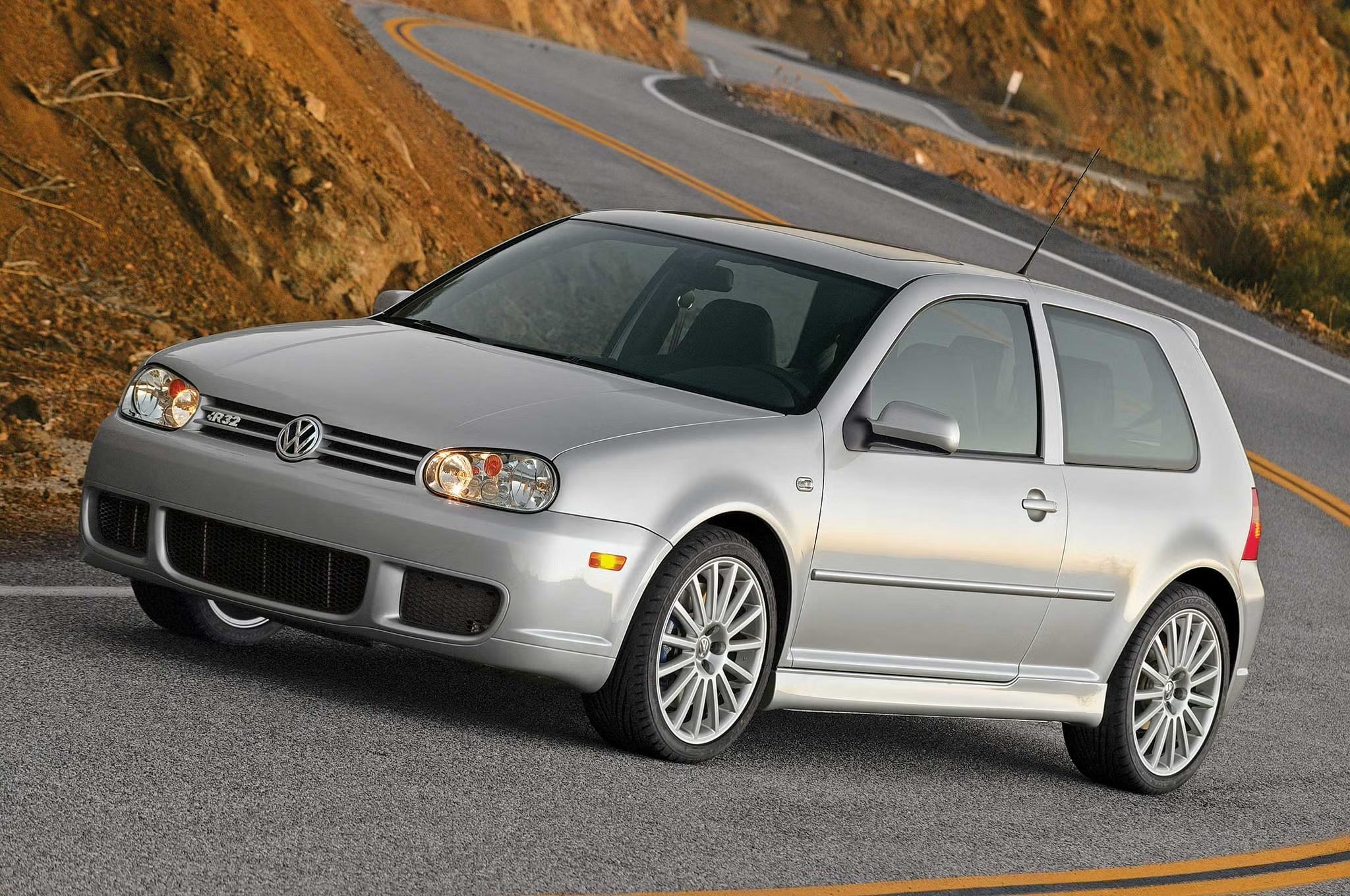
The VR6 engine is a narrow-angle six-cylinder with a 15-degree bank angle between the cylinder banks, allowing it to fit transversely in an engine bay sized for a four-cylinder while delivering genuine six-cylinder character. The 2.8-litre version in the MK3 produced 172 horsepower and 235 Nm of torque. The 0-100 km/h time was around 7.6 seconds. The top speed was 220 km/h.
The engine produces a sound unlike any four-cylinder hot hatch: a low, mechanical growl at idle that becomes something genuinely stirring at the top of the rev range. It is smooth in a way that no four-cylinder can replicate. In the humble Golf body it created something genuinely surprising: a practical hatchback that drove like a sports car in disguise.
The VR6 Golf is now among the most valued MK3 variants. Clean, original examples are difficult to find. The combination of the VR6 soundtrack, the GTI-spec chassis, and the Golf's everyday practicality has aged exceptionally well.
The rust problem
The MK3's reputation suffered significantly from a well-documented rust problem. Volkswagen changed its steel supplier during the MK3's development, and the new material proved less resistant to corrosion than the steel used in the MK2. Floor pans, door sills and rear arches were the common failure points. In markets with salted winter roads the problem was particularly acute.
The Harlekin: 264 cars and a legend
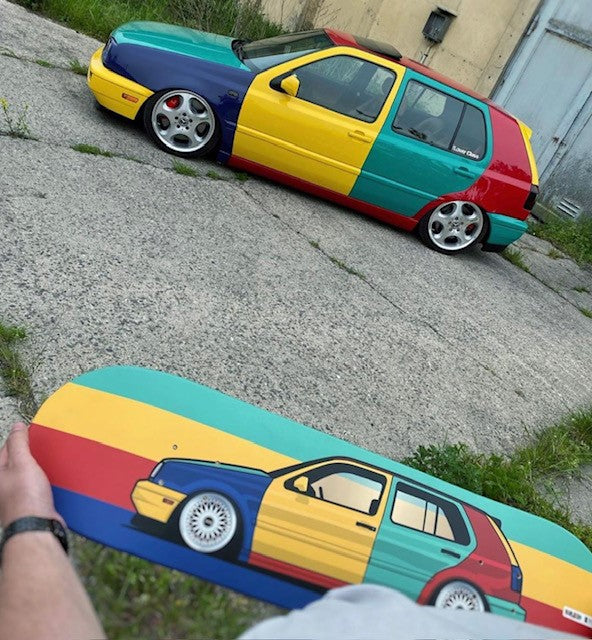
The Golf Harlekin is the MK3's most extraordinary variant and one of the strangest factory special editions in automotive history. Volkswagen offered the Harlekin as a demonstration of their paint production capability: a Golf with each body panel painted in a different colour from the standard Golf range. The bonnet in Tornado Red, the front fenders in Ginster Yellow, the rear fenders in Chagall Blue, the doors in Pistachio Green.
For North America, Volkswagen produced 264 Golf Harlekins through their Mexican production facility. Today, with fewer than 200 estimated to survive, the Harlekin is one of the most sought-after MK3 variants anywhere in the world.
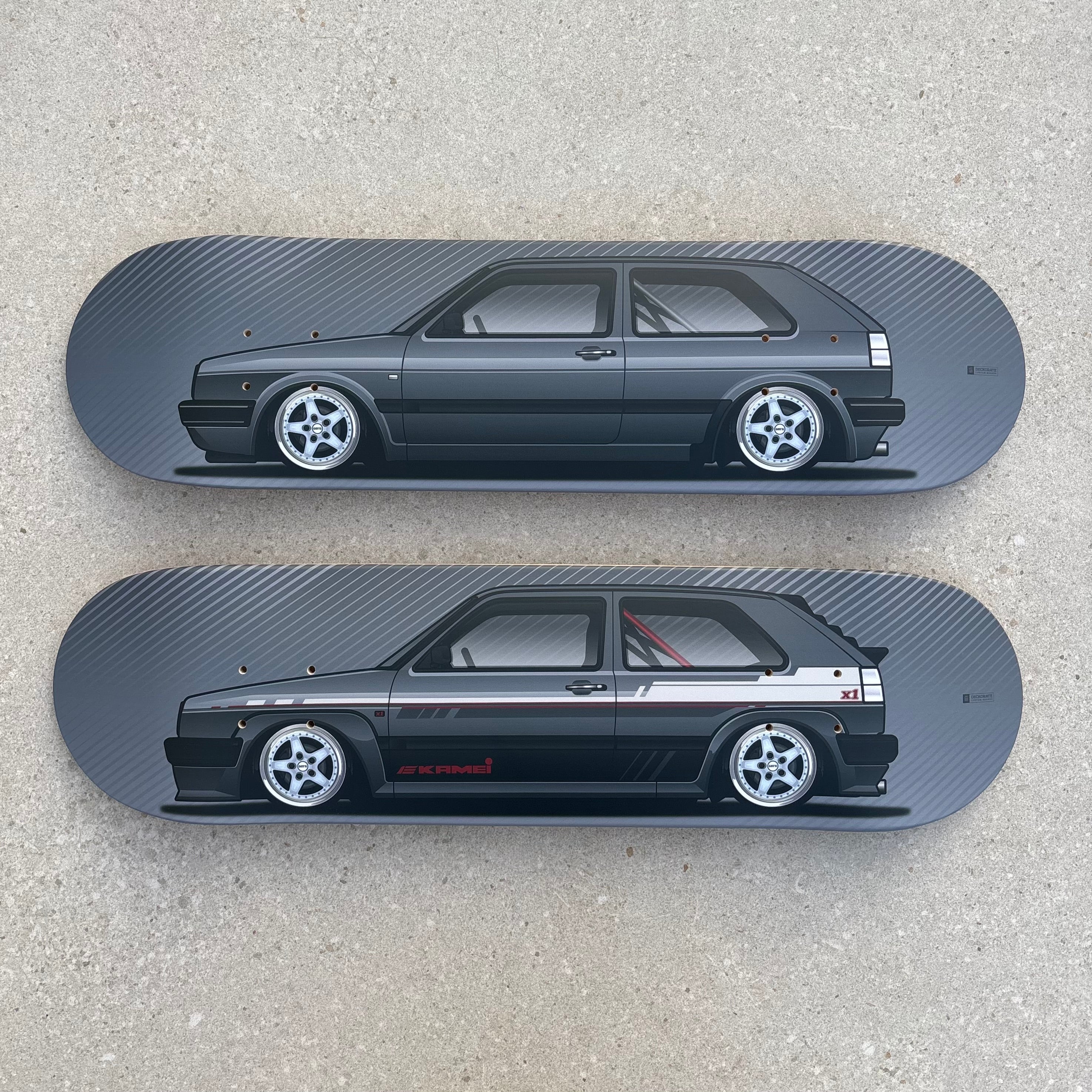
On your wall

Shop the VW Golf MK3 GTI deck →

Shop the VW Golf MK3 Harlekin deck →