The Deutsche Tourenwagen Meisterschaft of the late 1980s and 1990s was something that has never quite been replicated. Manufacturers poured serious money into what were nominally road cars, hired ex-Formula 1 engineers, and sent them to race on public circuits with almost no run-off. BMW against Mercedes against Audi against Alfa Romeo, every weekend, on tracks where the barriers were close enough to touch. This is the golden era, and these are the eight cars that defined it.
1. BMW E30 M3: the car that started everything
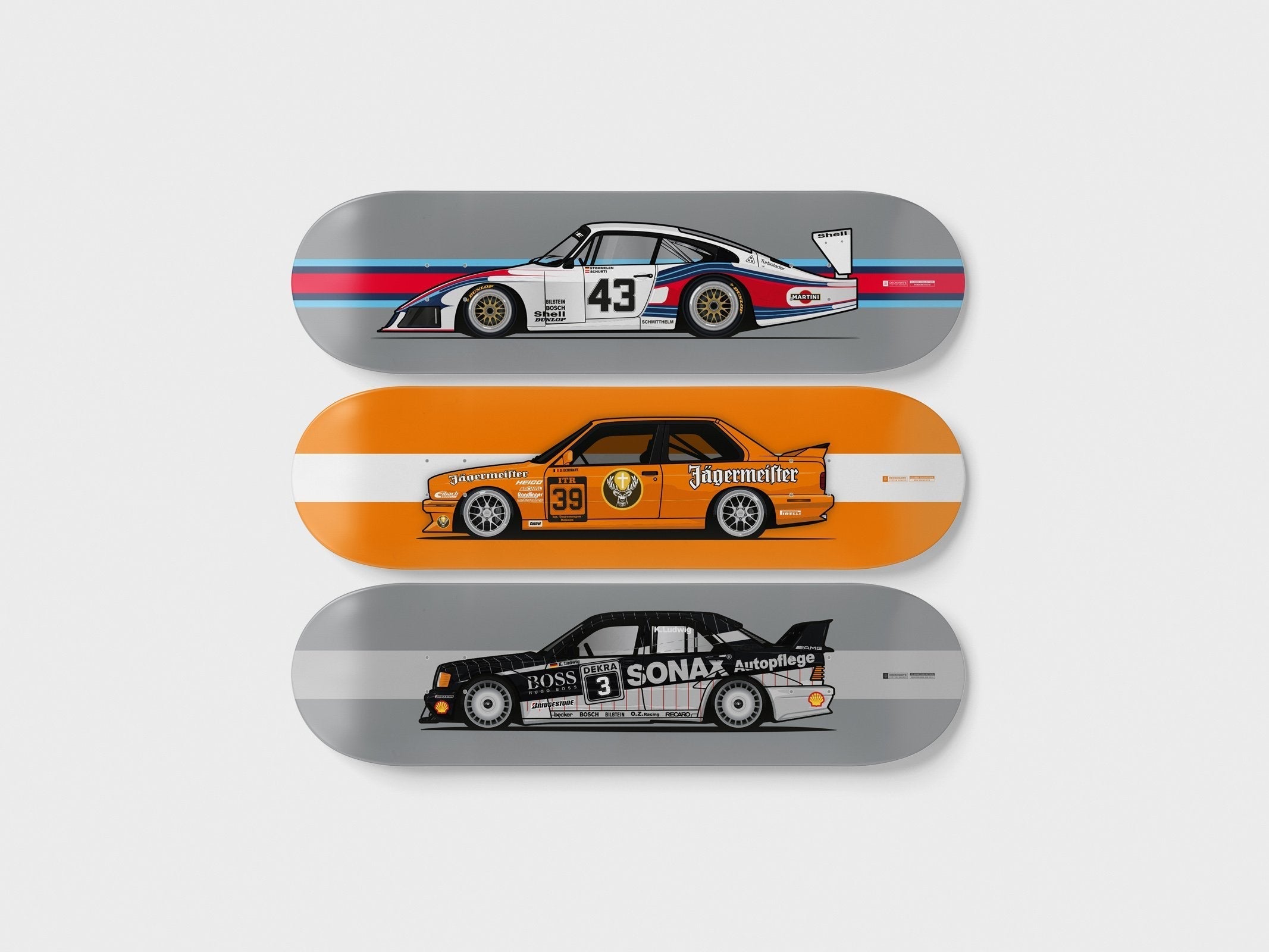
The E30 M3 was built for one reason: to win touring car races. BMW's motorsport division designed it as a homologation special for Group A competition, which meant producing 5,000 road cars in order to enter the race version. The road car was a byproduct. The race car was the point.
In DTM trim, the S14 engine was initially stroked to 2.3 litres producing 300 horsepower at 8,200rpm, growing to 2.5 litres and 340 horsepower by 1990. Factory-supported entries by Zakspeed, Schnitzer, Linder and Bigazzi kept BMW on top from 1987 to 1990, with Eric van de Poele taking the overall championship in 1987 and Roberto Ravaglia in 1989.

The E30 M3 became the most successful touring car BMW has ever produced. It also became one of the most desirable road cars of its era. Values that once seemed absurd now look like bargains. Every BMW M3 that followed exists because of this one.
2. Mercedes-Benz 190 E 2.5-16 Evolution II: the car BMW didn't see coming
After getting outpaced by BMW through the late 1980s, Mercedes went away and came back with something extraordinary. The 190 E 2.5-16 Evolution II was unveiled at the Geneva Motor Show ahead of the 1990 season, with more power and a wild new body kit. All 502 road cars required for homologation sold out before it was even unveiled.

The towering rear wing, the flared arches, the aggressive front splitter: legend has it that when BMW research and development chief Wolfgang Reitzle first saw the Evo II's rear wing, he commented that the laws of aerodynamics must be different between Munich and Stuttgart. The Evo II won the DTM championship in 1992, then again in 1994 and 1995. It is one of the most significant touring cars ever built and one of the most collectible road cars of the modern era.
Shop the Mercedes 190 Evo II deck →
3. Audi V8 Quattro: the intruder that won immediately
When Audi entered the DTM in 1990, they did not arrive quietly. At the dawn of the 1990s, the DTM grid was mostly dominated by the Mercedes 190E, the BMW M3, and the Opel Calibra. You can probably imagine the look on everyone's face when Audi turned up with the V8 sedan.

The Audi V8 Quattro used a 3.6-litre V8 producing 420 horsepower, mated to a six-speed manual and all-wheel drive. Where every other car on the grid was rear-wheel drive with a four-cylinder engine, Audi brought a luxury saloon with twice the cylinders and traction on all four wheels. On its first outing in the 1990 season, the V8 scored a 1-2-3 win for Audi. It was subsequently withdrawn due to regulatory conflicts, but its single season of dominance is one of the most emphatic debuts in touring car history.
Shop the Audi 90 IMSA GTO deck →
4. Alfa Romeo 155 V6 Ti: the Italian interruption
In 1993 the DTM switched from Group A regulations to FIA Class 1 rules, limiting engines to 2.5 litres and six cylinders. The regulation change that was supposed to level the playing field instead handed Alfa Romeo an unexpected advantage. In 1993, the Alfa Romeo 155 in the hands of Nicola Larini took the DTM championship after the new rule changes.
The 155 V6 Ti was visually spectacular: low, wide, with a quad exhaust configuration that became its signature. The sound was unlike anything else on the grid. The car dominated with such authority that the DTM regulations were revised specifically to reduce its advantage. Larini won the championship again in 1994 before the technical rules caught up with it. The 155 V6 Ti remains the only Italian manufacturer to have won the DTM outright.
5. BMW E36 M3: the successor that had to prove itself
When the E30 M3 was retired, the E36 M3 carried BMW's touring car ambitions into a new era and a new regulatory framework. The switch to Class 1 rules changed the technical landscape entirely: the cars became more purpose-built, less road-car derived, and considerably faster.
The E36 M3 DTM was a different animal from its predecessor. Wider, lower, more aerodynamically aggressive. The connection to the road car became more visual than mechanical, but the visual language of the E36 in touring car specification (the wide arches, the multi-spoke wheels, the liveries from Warsteiner and other period sponsors) is the image that many people carry when they think of 1990s DTM. Joachim Winkelhock and Emanuele Pirro were among the drivers who brought it regular victories through the mid-1990s.
6. Mercedes-Benz C-Class: the silver era
As the 190 E aged out of relevance, Mercedes replaced it with the C-Class in the mid-1990s. The D2-sponsored silver cars, with their distinctive yellow door mirrors and black wheels, became the visual identity of Mercedes' DTM programme for the latter part of the decade.
Klaus Ludwig took top spot for Mercedes-Benz in 1994 in the silver D2-sponsored C-Class. In the following season, it was Bernd Schneider's turn to pilot the iconic D2-sponsored car to victory, with its contrasting yellow door mirrors and black spoiler. Schneider would go on to become the most decorated driver in DTM history. The C-Class era is when his legend was built, and the visual identity of those silver cars is one of the most distinctive in the sport's history.
7. Opel Calibra V6: the wildcard that genuinely threatened
The Opel Calibra arrived in the DTM in the early 1990s as the unlikely dark horse of the field. A front-wheel drive road car converted into a touring car racer, it should not have been competitive against the purpose-built machinery from BMW, Mercedes and Alfa. It frequently was.
The Calibra's aerodynamic body shape (it had the lowest drag coefficient of any production car when launched) gave it an advantage at high-speed circuits that partially compensated for its mechanical compromises. Manuel Reuter won the DTM championship in the Calibra in 1996, the final season before the original DTM era ended. The Calibra is the great underdog story of the golden era: a people's car that beat the prestige manufacturers at their own sport.
8. Ford Sierra RS500 Cosworth: the turbo that won before the ban
Before turbocharged engines were banned from the DTM at the start of the 1990 season, the Ford Sierra RS500 Cosworth had one brief, spectacular window of opportunity. Ford came along with its Sierra Cosworth and took the title in 1988, with Klaus Ludwig at the wheel.
The RS500 was a homologation special built specifically to go racing. The road car used a 2.0-litre turbocharged Cosworth engine; the race car produced significantly more power and was the fastest car on the grid in its season of competition. When turbochargers were banned for 1990, the Sierra's advantage was legislated away. Its single championship win stands as a reminder of what it briefly was: the fastest touring car on earth.
The era that shaped everything after it
The DTM of the late 1980s and 1990s produced some of the most technically extreme and visually spectacular touring cars ever raced. The manufacturers were serious, the budgets were serious, and the racing was genuinely unpredictable. BMW against Mercedes on the same circuit, lap after lap, with the championship going down to the final race of the season: this was the format that made the series legendary.
The cars from this era now sell at auction for prices that reflect what they actually were: not race-prepped saloons but rolling pieces of motorsport history. The BMW E30 M3 DTM, the Mercedes 190 Evo II, the Alfa 155: these are the cars that defined a generation of European motorsport fans and haven't lost an ounce of their appeal in thirty years.
That's what makes them worth putting on a wall.
Shop the Mercedes 190 Evo II deck →
Shop the Audi 90 IMSA GTO deck →
For the full story of the most dominant car in DTM history, read our Mercedes 190 E 2.5-16 Evolution II deep dive →